I’ve been asked the question ‘why Stockholm?’ quite a few times over the last few weeks. I guess it’s not the most popular city for people from the UK to want to visit. If I were to ask you to make a list of European capitals, it probably wouldn’t be in your top five. If I asked most people to name something about it, they probably wouldn’t say much outside the stereotypes of ABBA and IKEA.
The simple answer to the question of ‘why Stockholm?’ is, simply, ‘why not?’ I had heard that the city was very beautiful – as, honestly, most European/world capitals tend to be – and I’ve always had an ambition to visit a Scandinavian country. So, I jetted off at the start of September 2019 to see what I could get up to there.
Before I get to the city itself, let me begin by talking about my flights and accommodation. I flew with British Airways, as I often do, and the service was punctual and comfortable. On my outbound flight I even lived the dream – two empty seats next to me!!

The hotel I stayed in was the Motel L Hammarby Sjöstad, which is a stylish place in the southern suburbs of Stockholm. I loved it, honestly. It was very colourful and stylish, and the bed was incredibly comfortable. It was also remarkably cheap, especially compared to most hotels in Stockholm. The trade-off is that you’re quite far out from the centre of the city, but there were easy public transport links which took about half an hour to get into the city ‘proper’.
Speaking of public transport, I was impressed by Stockholm’s system. The trams and underground trains are all very modern, clean and efficient. The Stockholm metro has been called ‘the longest art gallery in the world’, and I could see why – there’s an interesting design to all of them, with many having walls exposed to blasted rock. One stop I found myself at a couple of times – Kungsträdgården – had some genuine relics that were found during the excavation of the station. A mini museum!

In total, I spent three nights in Stockholm, leading to four days, although the first and final day were more ‘half’ days due to travel time. And I got up to rather a lot during them!
DAY ONE
I arrived at the hotel at about 4pm CEST, and was eager to explore the city. My guidebook told me I was reasonably close to a panoramic overlook called Mariaberget. So, I used the tram stop outside the hotel to get to the station Gullmarsplan, where I took a metro train to Slussen – which I would later discover is the Swedish word for a river lock. More on that later. I took a short walk to Mariaberget, and, yeah, it was a good way to start things off.
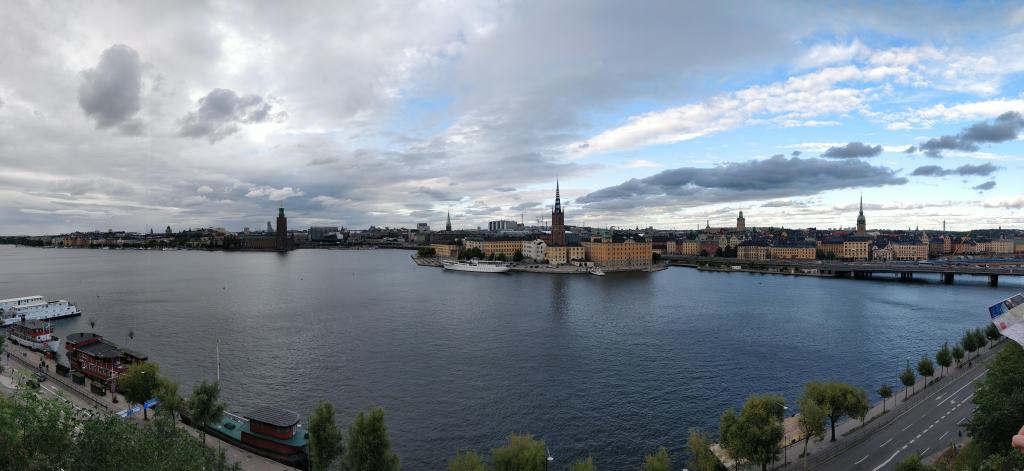
From ‘above’, I got a good sense of the beauty of the city, and it made me eager to explore it as thoroughly as I could.
I went back to Slussen station and took a train to T-Centralen, which, as the name suggests, is the central stop in Stockholm that all metro lines pass through, and it roughly equates to the modern ‘centre’ of the city.
I exited the stop onto a large plaza called Sergels torg (“Sergel’s Square”) which has an…interesting sculpture on the other side; a large obelisk which lights up blue in the evening and at night.
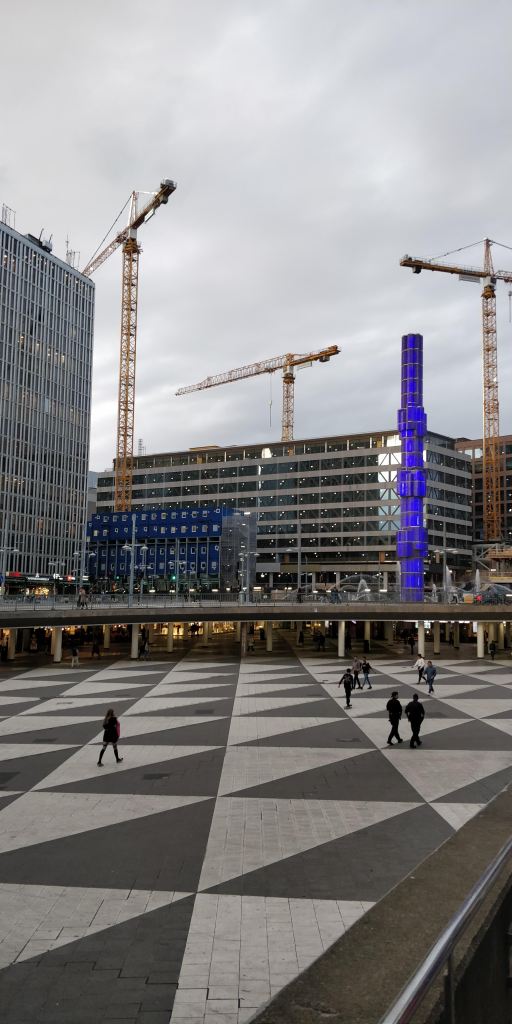
I spent a bit of time wandering up and down the north-south pedestrianised roads that led off Sergels torg and found a couple of things that were of interest. One was a restaurant called Pickwick that I loved so much I ended up going back on my third day. The meatballs and mashed potatoes I had were incredible, especially on that first night when I was running low on energy after so much travelling.

I also found myself in a small park called Tegnérlunden, which – oddly enough – had a Japanese flair and a quite pretty water feature, as you can see below.

I returned the hotel not long afterwards, looking forward to exploring ‘properly’ on my second day.
DAY TWO
I began the day by taking a train to Kungsträdgården – the stop I mentioned earlier – as I was due to go on a boat tour from a dock very close by. The trip, called Under the Bridges of Stockholm lasted a little over two hours, and took a voyage around all of the major islands of the city.
Stockholm, I learned on the trip, is made up of 14 islands right on the border between the salt water of the Baltic Sea and the freshwater of the Mälaren lake. The original Viking settlement that would grow into Stockholm (which, translated into English, means ‘log island’ due to a legend related to its founding) started on the island today known as Gamla stan – which translates as ‘old town’ so obviously is a more modern term. The island is located at the only natural inlet between the Baltic and Mälaren, so it was strategically useful for stopping would-be invaders from getting into the interior of modern-day Sweden. These days, there is a water lock, Slussen, that was built in the last century to allow larger ships to cross from the sea to the lake and vice versa.
Anyway, the tour covered a lot of the history of the city, as well as going into local traditions (of which a not insignificant number are related to vodka!), music, culture, mythology and the like. It was excellent value for money and I learned a lot from it. A few of the photos I took from the boat are below.


After the tour was over, I didn’t really know what to do next. I decided to take a wander, firstly, around Gamla stan and its ancient buildings. You can really tell it’s the ‘old town’ – much like the old towns of cities like Prague and Vienna, the streets are much narrower and more randomly laid-out than in the rest of the city.
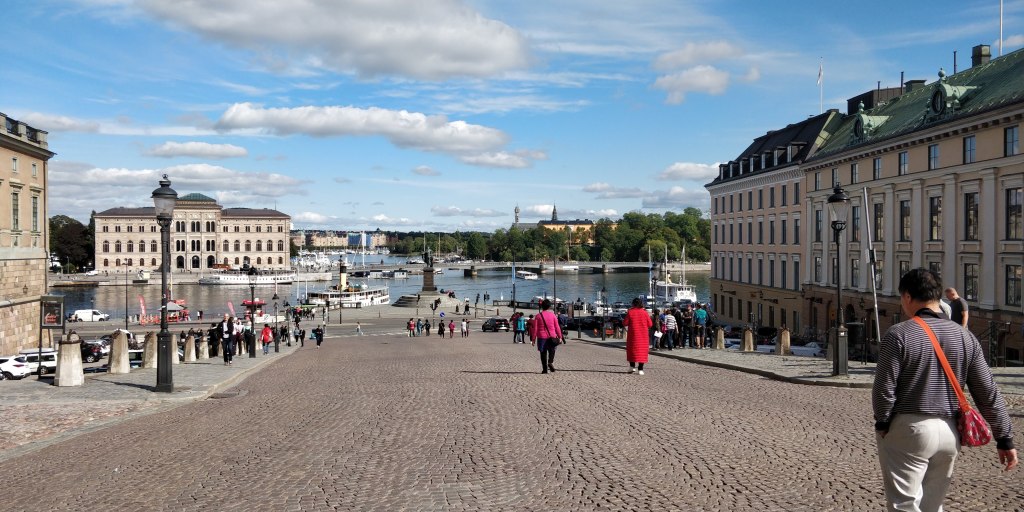
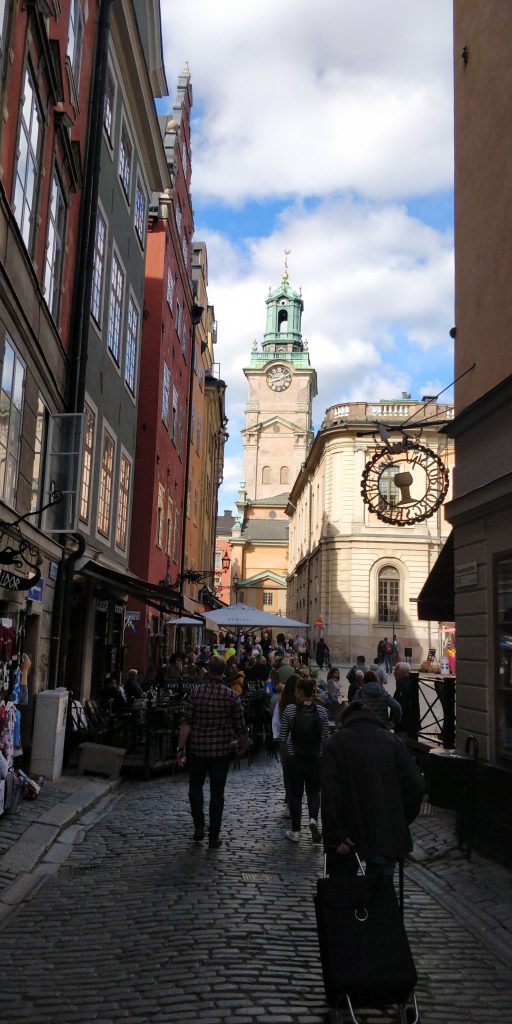
After leaving Gamla stan, I looked at the map on my phone and, essentially, decided to just walk north and see what I could find. There were a couple of small parks and plazas on the way, but nothing really worth describing in great detail.
After heading east into the Östermalm district, I stumbled upon the Historiska museet (do I need to translate that?), which had multiple signs outside promising free admission. It was getting on a bit by this point, around 5pm, and I wasn’t sure if I would have time to explore, so I went up to the door. The closing time for September was listed as 5pm, so I decided I would return the following day instead…until I noticed an extra line at the bottom – ‘Open until 8pm on Wednesdays’. As luck would have it, it was Wednesday!
The museum was fascinating, and again I learned more about the stories that made Sweden. The museum had a real focus on the humans behind the history, with lots of exhibits about how people would have lived in certain times, and posing existential questions about the nature of humanity. There was also a heavy emphasis on the role of women throughout Swedish history, which I found very interesting. Sweden is a very liberal and tolerant country, with gender equality a cornerstone of their society, and it’s clear that that’s something that’s not just a modern invention. Anyway, the museum was quite heavy, at times, but really enjoyable! Also, they had helmets you can try on, so naturally I had to…when nobody else was looking, of course:


After the museum, I did a touch more wandering around, before ending up at Tessinparken and Karlaplan, another park and plaza located quite close to each other, before heading back to my hotel for the night, content with having had a lovely and relaxing day in a city I was growing increasingly fond of.

DAY THREE
This was already my final ‘full’ day in Stockholm so I wanted to make the most of it, but unfortunately I woke up with sore feet from all the walking I’d done the day before. They got better as the morning progressed, thankfully, but I endeavoured not to do quite so much walking on this day… that didn’t work out, as you’ll soon see, and I would live to regret it!
I decided to spend my day in the Djurgården area of the city, which translates as ‘Game Park’. The area was in past centuries used as hunting grounds for the royal family. These days, it’s a sparsely populated area compared to the rest of the city, with the majority of it being given over to a large public park and an open-air museum called Skansen. I’ll come back to that later.
My first port of call was the Vasa museum, a facility dedicated to preserving the 17th century warship Vasa, which sank in Stockholm harbour in 1628 only twenty minutes into its maiden voyage. Now, I knew about the museum in advance of travelling to Stockholm, as it’s rated as the number one attraction in the city on TripAdvisor. However, I was on the fence about going. I’m interested in history, but I have no real knowledge or particular interest in naval history. And, ultimately, the museum has one exhibit: a big boat. I thought I wouldn’t find it especially interesting.
I was wrong.
The Vasa museum was, I would say, my favourite part of the trip. I was not wrong that the museum only had one exhibit (well, technically there’s more, as artifacts that were recovered from the ship as well as skeletons and items belonging to the crew who died were also displayed), but man, what an exhibit. The photographs you can see in this post of the ship and any other photos or videos you may see online cannot prepare you for the sheer scale of the Vasa. It’s gigantic. And it’s almost impossibly well preserved – over 95 percent of the ship is original. It almost looks as though they could tow it (sorry, her) out into the Baltic and set her sailing at any time. It was absolutely incredible. There was a free guided tour and movie included in the entrance price, both of which were very interesting and made me want to learn even more about the ship. It’s a fascinating story, and I would wholeheartedly recommend that anyone visiting Stockholm go to see the Vasa in all her glory. As mentioned, these photos don’t do the museum the justice it deserves!


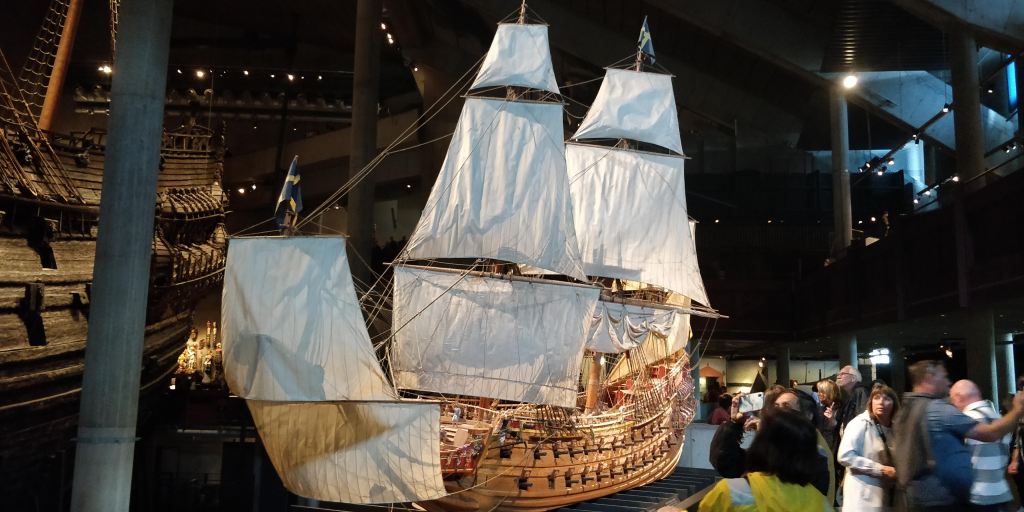

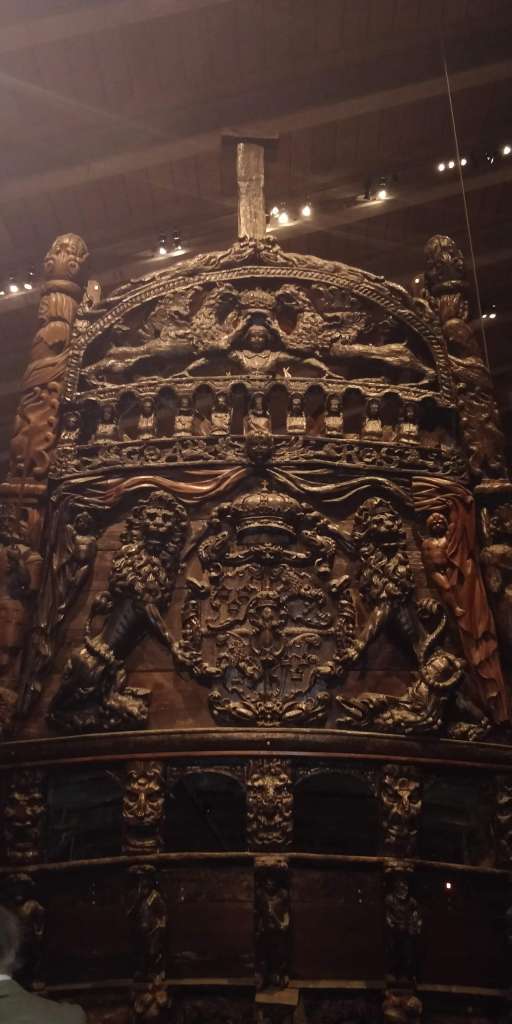
My brain once again filled with a wonderful fresh dose of history, I wandered around the Djurgården a little. That’s where the ABBA museum is, by the way. I did not go into the ABBA museum.
I found the main entrance to Skansen a little further down the main road of Djurgården. Skansen is the world’s oldest open-air museum. Effectively, it’s a recreation of rural life throughout different eras and regions of Sweden’s history, and exhibits include park workers dressed in period clothing doing traditional work. For instance, in one cabin there’s a book printer, in another a person bakes traditional Swedish flatbreads, one is a metalworker making horseshoes and so on. Unfortunately, photography of these activities was not allowed, but you can see some examples on their website. Skansen also has a small zoo included in the entrance fee, where they have several typical Nordic animals such as brown bears, moose and, uh, chickens.



Skansen is situated on a steep hill, which was murder on my feet, if I’m honest. My left foot, especially, was starting to scream, telling me to stop. I did sit to rest up quite a few times, but the constant ups and downs of Skansen wasn’t doing me any favours.
Skansen is also incredibly badly signposted. There are maps all over the place but for some unknown reason there isn’t a ‘you are here’ marker on any of them, making them about as useful as using chopsticks to eat soup. Since most of the attraction is pretty sparely laid out (you have to take wooded paths from one area to another), it’s really tricky to get your bearings. Also, the signposts pointing at certain sections usually have a distance on them (200 metres for example), but I found these to be seriously incorrect, often leading me to the wrong place or areas being far further away than they seemed.
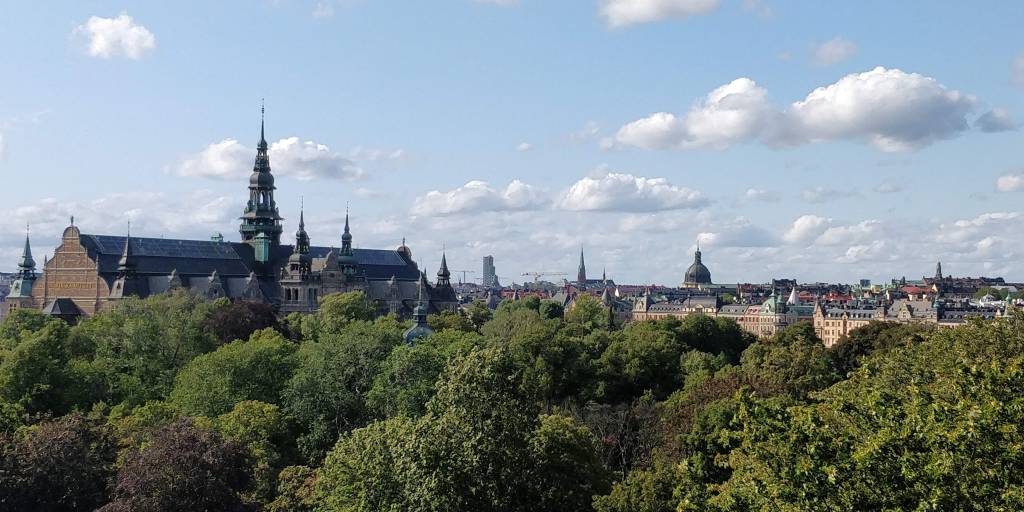
However, the hill did provide a couple of scenic places for some photos:

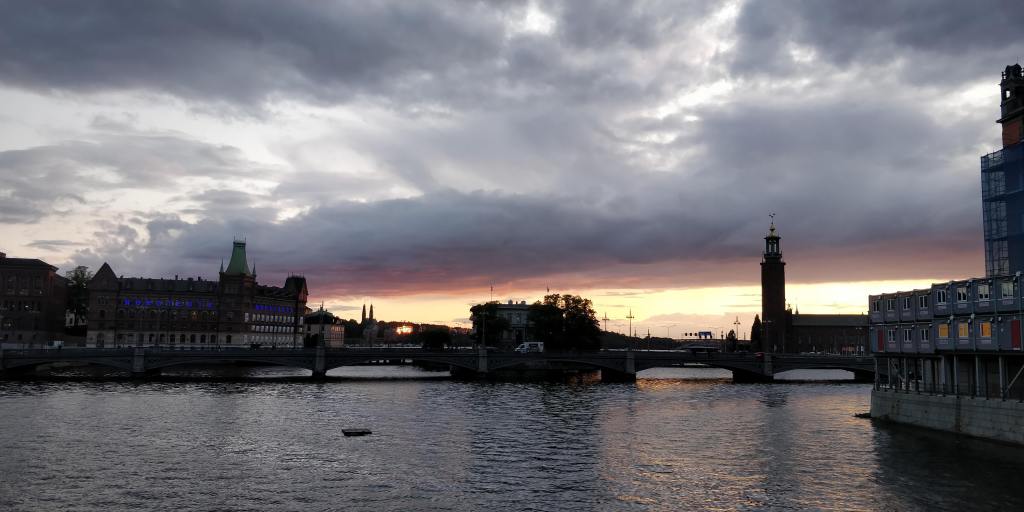
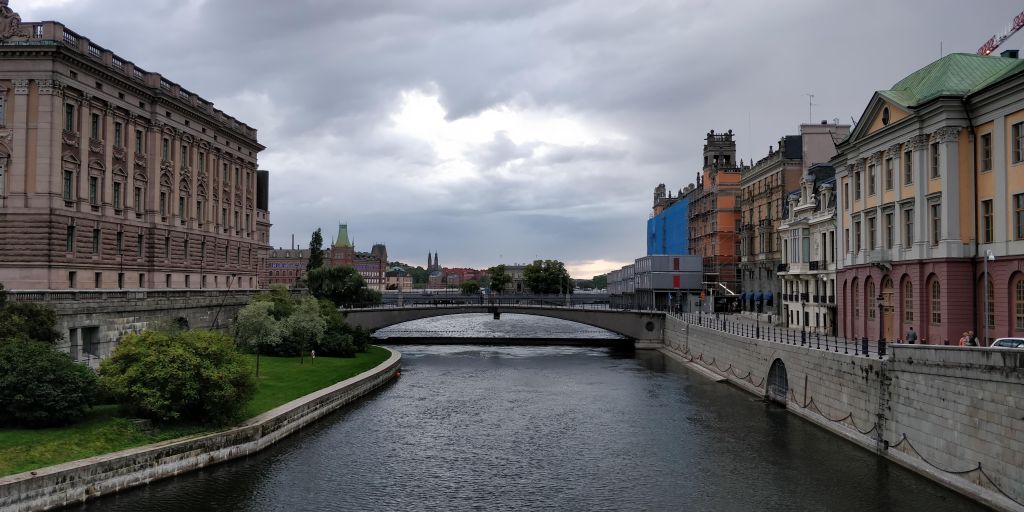
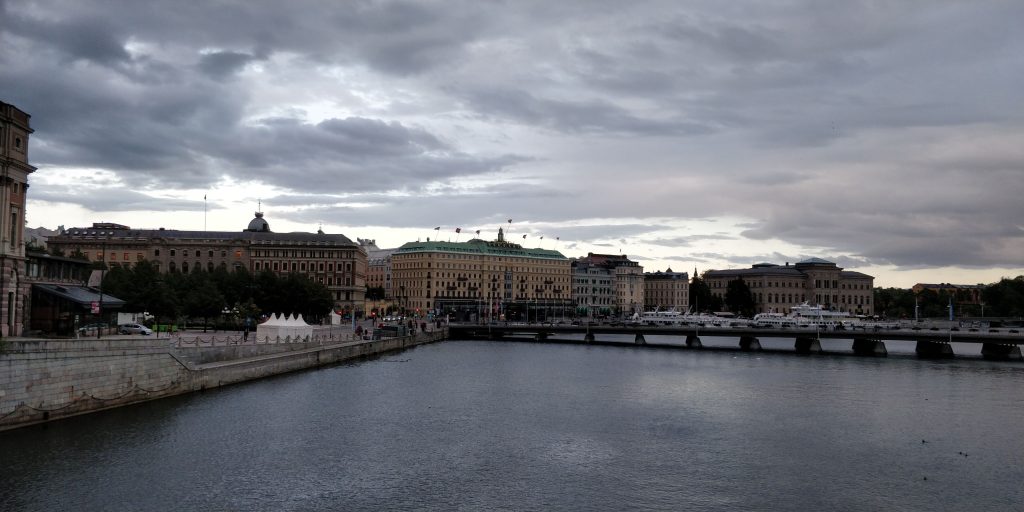
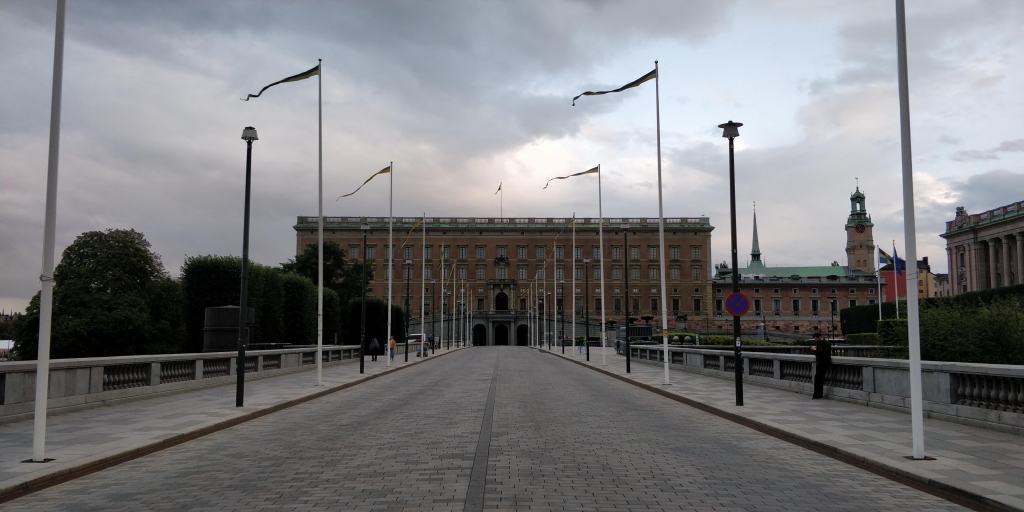
I went back to Pickwick for dinner and took one last look around Gamla stan and the shops near T-Centralen before heading back to my hotel, picking up a couple of souvenirs and taking some final shots of the city as I did so, some of which you can see below. But by this point, my feet were on fire and I was wandering at a snail’s pace, so I didn’t hang around to do too much more. I had never felt such relief when I slipped my shoes off at the hotel and lay on the bed.

DAY FOUR
My flight was at 15:45 on my final day, but check-out time of the hotel was midday. I figured that would give me a bit of time in the morning to have a bit of an explore around the area of the hotel, which I hadn’t done to that point. However, upon waking up, my feet – my left foot specifically – was in absolute agony. I could barely walk. Overnight, a blister had grown on my smallest toe, a huge one, making it seem like almost double its normal size. Be thankful that I did not take any photographs.
I decided to try and push through the pain and planned out a short walk down the road to the east, which would lead to a sculpture on the bank of the Baltic that I had seen from the tour a couple of days previously. I could then circle back around. The whole route was maybe a little more than a kilometre.
I was limping the entire time like someone whose had one leg shorter than the other. I’ve had blisters before, and other problems with my feet, but this was genuinely something catastrophically painful. I’m typing this post from home the following day, and although the blister has receded somewhat, it still hurts now, and I’m still walking with a bit of a limp. Clearly, the pain that started on the third day when I was in Skansen was my body’s way of telling me to slow down and rest up; ignoring it was a big error. In fairness to myself, I’ve done trips featuring lots of walking plenty of times before, and never encountered something like this. I did buy new shoes prior to the trip, which might be the culprit, but regardless, I definitely learned something about my body on this holiday!
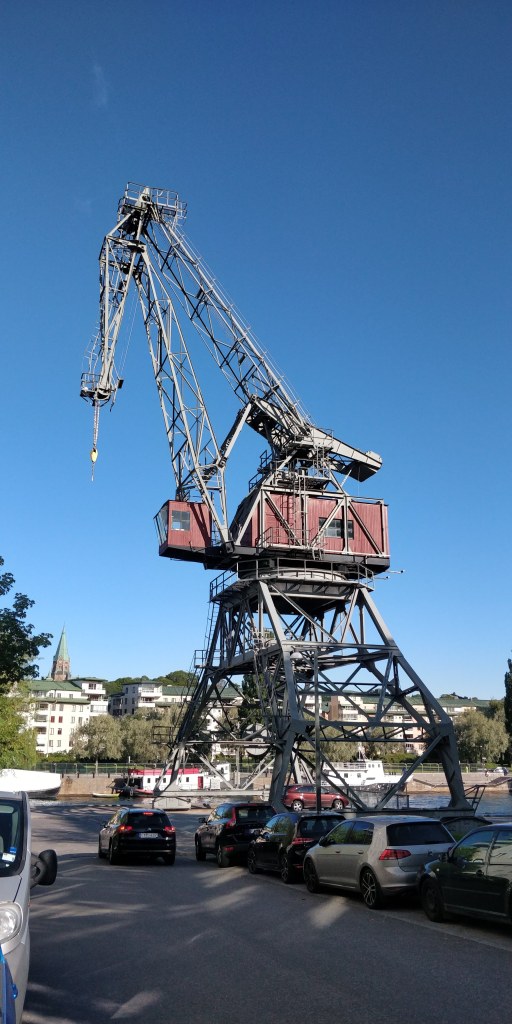
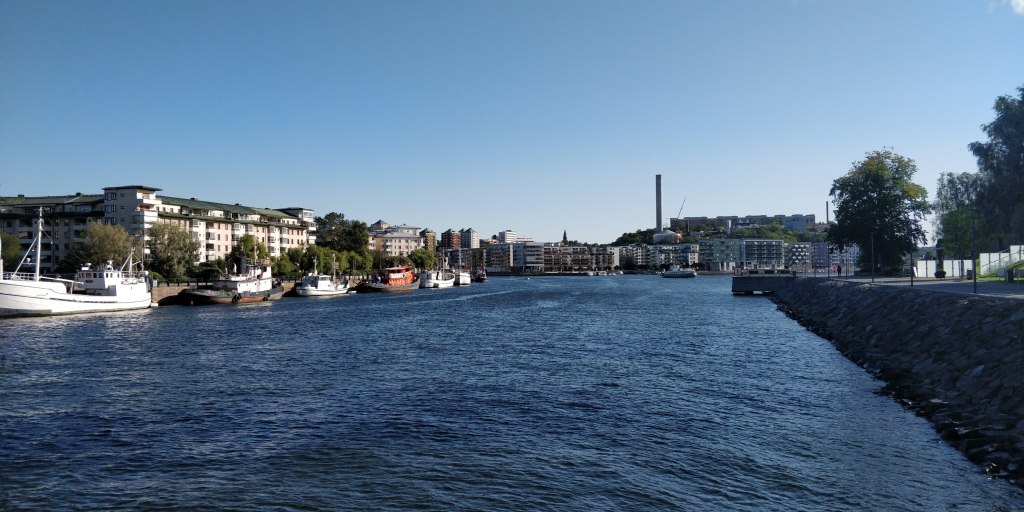
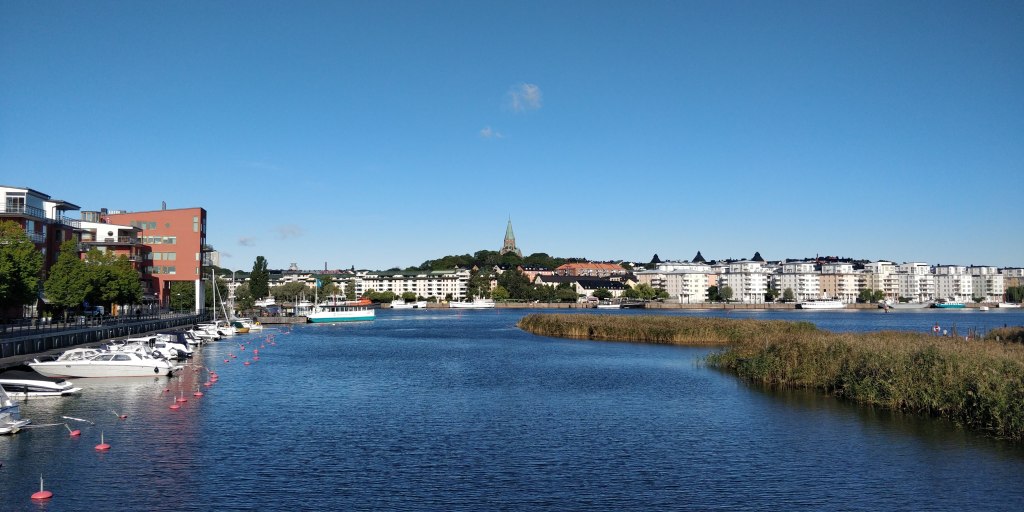
Anyway, I did manage to make the route I’d planned out, although it took me about an hour. As someone who’s normally a pretty fast walker, that really was a crawl for me. I did get a couple of final lovely photos of Stockholm, though, which you can see below.
I left for the airport soon after, in excruciating pain, and began my journey home.
I really enjoyed Stockholm. It’s a beautiful, clean city, with very friendly people and a calm atmosphere. I wish I could have spent a bit longer exploring its streets, but at the same time I feel I squeezed in a lot in my short time there. Will I return one day? Maybe! I’d certainly recommend it to anyone looking for a city break with a relaxed vibe. Maybe it’s something about the fresh, clean air, but I found the city very soothing for my body and soul.
Well, maybe my left foot would argue otherwise.
 Shane Rynhart